
Travelling with sight loss: practical tips and support
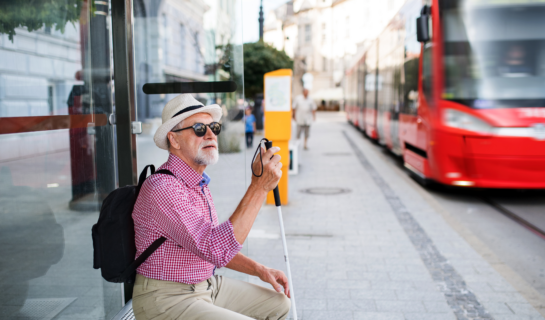
Getting from A to B should not feel like an obstacle course. For blind and partially sighted people, the transport landscape is evolving, offering more tools and services to make travel easier and more accessible. Whether you are heading to a local café or travelling further afield, a little preparation and knowing what support is available can make all the difference.
Passenger Assistance
Passenger Assistance at train stations and airports can make a big difference. By booking in advance, you can request a member of staff to meet you, guide you through the station or airport, help you find your platform or gate, and board your train or flight.
Hidden signals
Many transport hubs recognise the Sunflower Lanyard. Wearing one tells staff you have a non-visible disability and may need extra time or support, without having to explain your situation each time.
Travelling with a guide dog
Guide dogs are allowed on all forms of public transport in the UK. On buses, priority seating often provides more space. On trains, you can request an Assistance Dog Under Seat card which alerts passengers that the floor space is occupied. For flights, guide dogs can travel in the cabin with you on approved routes, however, it is important to notify the airline in advance so appropriate arrangements can be made.
Community Transport
Community Transport schemes can help if regular services are not suitable. Often run by charities, these services provide flexible, door-to-door travel using accessible vehicles or volunteer drivers and can be a helpful option if you find standard public transport difficult to use.
Bus passes and railcards
If you are registered with sight loss, you may be eligible for free bus travel, depending on your area. In some places, you may also be able to apply for a Companion Pass, allowing someone to travel with you. The Disabled Persons Railcard offers discounted rail travel for you and a companion.
Top tips for bus travel
Signalling a bus can be stressful when you cannot read the number on an approaching bus or the information display board. The following tips can help:
- Do not be afraid to hold your hand out for every bus that approaches. When it stops, simply ask the driver which number it is. Most drivers are happy to help once they realise the situation.
- Keeping your cane visible lets the driver know you have a visual impairment and may prompt them to slow down or stop.
Apps can also help you plan your journey and find your stop. Tools such as Lazarillo or Microsoft Soundscape provide spoken directions and describe your surroundings, helping you navigate more precisely, for example, guiding you directly to a bus stop rather than a general location.
Building confidence
Support is available locally to help you feel more confident travelling. Our charities can offer advice on what is available in your area, help you apply for passes, and connect you with Rehabilitation Officers for mobility training. Having the right support and tools can make journeys easier and more enjoyable.