
Make-up tips for blind and partially sighted people
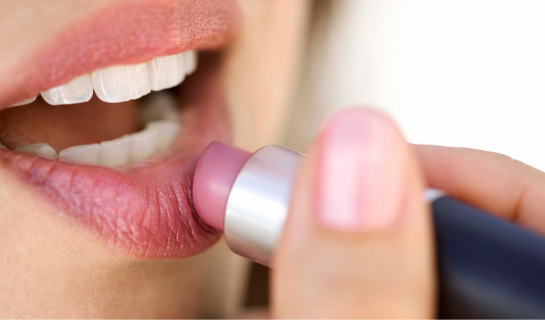
Make-up can be an important part of feeling like yourself and ready to face the world. But because it’s such a visual thing, it might feel like something that’s no longer possible after your vision changes.
It’s easy to feel self-conscious, wondering if your make-up looks uneven or messy. Yet avoiding it completely can take away a simple pleasure and that feeling of being more like yourself.
As with many things, it’s about finding new ways to do what matters to you. With time and practice, applying make-up can become familiar as you build up muscle memory.
Simple make-up can make a big difference. A tinted moisturiser, mascara and a lip tint can instantly make you feel more polished and confident. But dramatic looks are possible too.
Lucy Edwards has great tips on social media, like using tape to get a neat, winged eyeliner edge. You could ask a friend for feedback, use a magnifying mirror or take a selfie and zoom in to check.
Don’t be discouraged: if it’s not perfect at first, keep practising. Some people find it helps to practise one area at a time, such as eyes or lips, until you build confidence before putting a whole look together.
You can also experiment with different brands, formulas and types of make-up to find what works best for you.
Make-up tips
- Stick and cream products, like foundation or blusher, are often easier to control and blend than powders.
- Chilling an ink eyeliner briefly can make it easier to feel the tip as you trace along the lash line.
- Eyeshadow sticks blend easily, or try an eyeshadow trio palette of light, medium and dark shades. Apply with your fingers for placement, then buff with a brush.
- Do your eye make-up first and wipe away smudges with micellar water before foundation, or leave eyes until last and use cotton buds to tidy up.
- A soft kabuki brush helps you feel where the product is and achieve an even blend.
- Eyebrows can be tricky, so consider getting them shaped and tinted professionally.
Identifying make-up
Tactile dots, elastic bands or raised stickers can help identify items. Some brands include braille, and others have distinctive packaging that’s easy to recognise by touch.
Some people use small NFC tags, which are stickers your smartphone can scan to identify items such as eye shadow colours.
Apps like Be My Eyes, Seeing AI or Meta glasses can also help, and some people use Be My Eyes to ask a volunteer to check their make-up.
Buying make-up
It can be easier to compare products online before buying, but visiting a beauty counter at least once can be really useful.
Beauty advisors can show you how products feel on your skin, where to apply them, and which shades suit you. Combining online research with an in-store visit can help you choose what’s right for you.
Find out more
There are lots of useful make-up tips and tutorials available from organisations and creators including Guide Dogs, RNIB, Retina UK, Lucy Edwards and Claire Sisk.
Of course, make-up isn’t for everyone. But it’s a great example of finding new ways of doing things.
Whatever your interests or passions, there may be different tools, techniques or support that can help you continue doing the things you enjoy.
Please contact us to find out more.