
Are we there yet? Making holidays easier with sight loss
Having a holiday can be one of life’s greatest pleasures. But what about when you are blind or partially sighted? Are you still able to enjoy a wide range of holidays and take part in the experiences travel has to offer? We think so.

This article shares some ideas and things to consider when planning a holiday, whether you are travelling independently or with additional support.
Specialist holidays
One option is to book with a specialist holiday company. These organisations design holidays specifically for blind and partially sighted people and may offer additional support, such as sighted guides or adaptations to activities and accommodation.
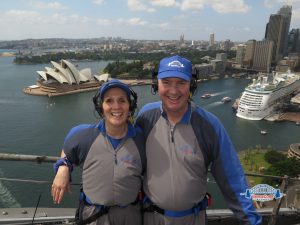
We spoke to Jenny and Steve, who have taken several specialist holidays. They told us that travelling in this way had been a liberating experience, allowing them to take part in activities they might not otherwise have considered. Their experiences have included climbing Sydney Harbour Bridge, cycling across Holland, white water rafting, and even a hands-on experience of a Michelangelo statue in Russia (gloves were mandatory).
“Specialist companies have given myself and my partner memories and experiences to last the rest of our lives.”
Some specialist holidays focus on particular interests, such as wine tasting, poetry, learning a language, or local history. Others are more adventure-based. Organisations such as the Calvert Trust offer adapted outdoor activities including climbing, cycling, and zipwires. If you enjoy walking or hiking, there are a number of groups and charities across the UK that organise walks. Local rambling clubs, disability walking groups, and accessible outdoor organisations often welcome visitors and can be a great way to explore the countryside with support and company.
For those looking for a more relaxed break, some hotels and accommodation providers offer accessibility support, with staff trained to assist blind and partially sighted guests. There are also residential homes that offer short-term respite breaks in accessible settings.
Specialist support is available for overseas travel too. Some companies organise group holidays pairing people with sight loss with sighted guides, often on a rota, which can also be a sociable way to travel and meet new people. Examples include TravelEyes, Seable, Responsible Travel, and Limitless Travel.
The RNIB website also includes an overview of specialist holiday companies and travel ideas, which may be helpful when exploring your options.
Mainstream holidays
Mainstream holidays can also be accessible with planning and preparation. Some things to think about include:
Sighted guiding support can make a big difference. You may travel with a companion, but there are also organisations that help match people with guides or companions such as Universal Aunts
Assistance is available at train stations and airports, but this usually needs to be booked in advance.
Finding out about trips, excursions, and activities ahead of time can help you plan. Saving information to your phone or printing key details can be useful, as can planning routes in advance.
If you have specific requirements, such as large print menus or a hotel orientation, it’s worth asking in advance. Many hotels and tour operators are happy to make reasonable adjustments if they know your needs.
Think about any small pieces of equipment you use at home that could be helpful to take with you, such as a talking clock or liquid level indicator.
Small details can make a big difference. Our rehabilitation team has shared a practical guide, Tips and tricks for holidaying, which brings together useful ideas to help make travelling and time away feel easier and more manageable.
Finances
If cost is a barrier, it may be worth exploring whether financial help towards a holiday is available.
For young people, the Family Fund may be able to help. For people of all ages, the disability grants website is a useful place to search for potential funding. The RNIB helpline can also offer guidance on funding options on 0303 123 9999.
The organisations and funders mentioned here are provided for information only and are not endorsed by us. Availability and eligibility may change, so we recommend checking details directly.
This article offers an overview of some of the options and considerations when planning a holiday. Everyone’s situation is different, and doing your own research is always important. If you have tips or experiences you’d like to share, we’d love to hear from you.