
Identifying sterling currency with little or no vision
Handling money can feel challenging if you have little or no vision. UK coins and notes are designed with differences in size, shape, and texture that can help blind and partially sighted people identify them by touch.
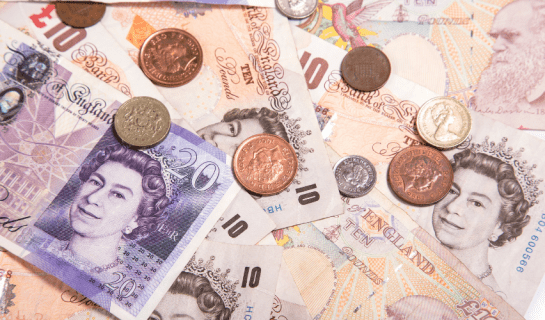
This guide explains how to tell sterling coins and notes apart using feel rather than sight.
Coins
1p
The 1p coin is small, round, and has a smooth edge.
2p
The 2p coin is larger than the 1p. It is also round with a smooth edge.
5p
The 5p coin is small and round with a ridged edge. It is similar in size to the 1p, but the ridged edge helps distinguish it.
10p
The 10p coin is round with a ridged edge and is similar in size to the 2p. The ridged edge makes it easier to tell apart from the smooth-edged 2p.
20p
The 20p coin is small and has a seven-sided (heptagonal) shape with smooth edges.
50p
The 50p coin is larger than the 20p and also has a seven-sided shape with smooth edges.
£1
The £1 coin is similar in size to the 20p but thicker. It has 12 sides, which makes it feel distinct from other coins.
£2
The £2 coin is similar in size to the 50p but thicker. It has a smooth edge and a bi-metal design, which can often be felt by touch.
Notes
UK banknotes are made from polymer and vary in size and tactile features.
£5
The £5 note is the smallest of the banknotes and has a smooth surface.
£10
The £10 note is slightly larger than the £5. It has two clusters of raised dots in the top left corner on the front of the note, which can be felt by touch.
£20
The £20 note is larger again and has three clusters of raised dots in the top left corner on the front of the note.
Additional support
Some people also find it helpful to use tools such as note identifiers, coin trays, or accessible banking apps. Your local Sight Loss Advisor can help you explore different options and find what works best for you.