
Tips and tricks in the kitchen
Spending time in the kitchen can feel more challenging when your sight changes, whether you are cooking every day or just now and then. Small adjustments, good lighting and the right tools can make tasks feel safer and more manageable.
These practical tips have been pulled together to help blind and partially sighted people feel more confident when preparing food and drinks, while reducing the risk of spills, cuts or burns.
Simple ways to make cooking easier and safer
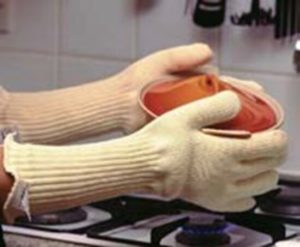
Use long oven gloves that cover your forearms when taking items out of the oven. Brightly coloured oven shelf guards can also help you feel where shelves are.
Add extra lighting where you need it most. Stick-on LED lights can be useful inside cupboards or under wall units to brighten work surfaces.
Keep cupboards organised so similar items are stored together. For example, keep tins on one shelf and drinks on another. Boxes or trays can help separate items and make them easier to find.
Use elastic bands or tactile markers to tell similar packages apart, especially when labels feel the same.
A pizza cutter can be easier than a knife when slicing sandwiches or wraps, as it keeps your hand further away from the cutting edge.
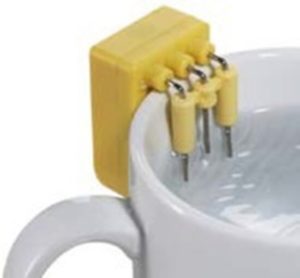
A liquid level indicator can help when making hot drinks. It clips onto the side of a mug and beeps when the liquid reaches the top, helping to prevent overfilling.
Think about colour and contrast when choosing mugs, cups and trays. A dark mug for a light drink or a light mug for a dark drink can make the liquid easier to see. Using a contrasting tray underneath can also help.
Consider colour contrast when chopping food. For example, a white chopping board works well for darker foods, while a darker board can help lighter foods stand out.
Pressing a metal comb into an onion can help keep it steady while chopping. You can cut between the teeth of the comb, reducing the risk of the knife slipping.
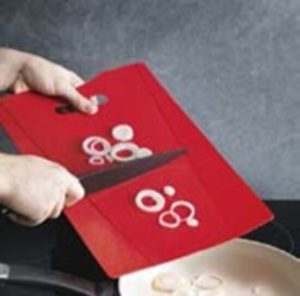
When slicing vegetables, angle the knife away from your body and fingers, cutting diagonally rather than straight down. Holding food with a fork can also help keep fingers safely away from the blade.
Kitchen scissors can be useful for some chopping tasks, such as cutting herbs, spring onions, or opening packaging.
Talking, audible or tactile equipment such as weighing scales, timers and measuring spoons can make measuring and timing much easier.
Raised, brightly coloured dots can be used to mark settings on ovens, microwaves and other appliances. These can help you identify temperatures, timings or programme settings by touch.
Further support
Everyone’s kitchen and eyesight are different, and what works for one person may not work for another. Our Community Sight Loss Advisors can offer personalised advice, demonstrate equipment and help you explore small changes that suit your home and your routines.