
Who’s who in the hospital eye clinic
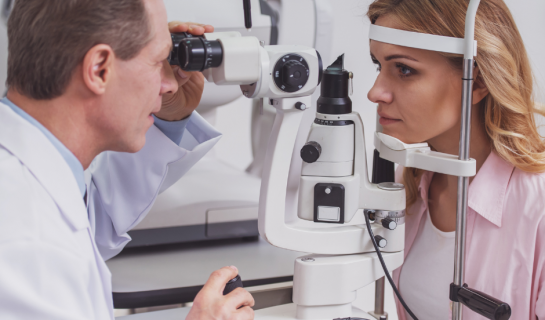
The traditional eye health care team has changed and continues to develop to meet the demands placed on the hospital eye service. This is due to an increase in chronic disease management due to the aging population in the UK as well as the new and successful treatments available. The eyesight of patients, in many cases, can now be saved or prolonged for many years.
Aspects of clinical work that were previously the domain of the medically qualified ophthalmologist are now being delivered by a broader multidisciplinary team. This new team of qualified optometrists, orthoptists, ophthalmic nurses, ophthalmic / optometry technicians can take on expanded roles, where suitably trained, to release ophthalmologists to deal with the more complex cases and decision making.
Who are the members of the eye care team?
- Ophthalmologists
- Optometrists
- Orthoptists
- Ophthalmic registered nurses
- Ophthalmic/optometry technicians
Ophthalmologists
Ophthalmologists are medically qualified doctors who specialise in eye disease and its treatment. They mainly work in eye hospitals and hospital eye departments. Consultants have their own speciality e.g. glaucoma, medical retinal (includes macular degeneration, diabetic retinopathy, retinal vascular disease), cornea and anterior eye disease, paediatric eye disease, oculoplastics etc. Most carry out cataract surgery.
Optometrists
Optometrists are professional clinicians responsible for many aspects of vision care. Optometrists undertake examinations of the eye for optical defects and correct defects using spectacles and contact lenses. They assess functional disorders of the eye and visual systems.
Optometrists working in the HES provide secondary care to patients, usually in a hospital setting, including diagnostic refractions, medical contact lenses, Low Vision Aids and enhanced optometric services including glaucoma assessment and management, corneal assessment and management, eye casualty, post operative cataract assessment, joint orthoptic and optometric paediatric assessment and management and support for intra-vitreal injections. In a number of specialist clinics, such as macular clinics and glaucoma clinics, they work alongside consultant ophthalmologists to assess, diagnose, monitor and recommend treatment to patients. Many Optometrists have an independent prescribing qualification.
Orthoptics
Orthoptics is a profession allied to medicine. Orthoptists investigate, diagnose and treat visual problems and eye movement disorders such as lazy eye (amblyopia), squints, defective binocular vision and double vision (diplopia).
Many of their patients will be children who are assessed and treated whilst their vision is still developing (up to the age of 7) but they also assess children of any age for a variety of binocular vision problems. Adults attend their clinic as they can develop ocular motility problems resulting in diplopia or other ocular symptoms due to injury or disease. Specialist services include the assessment and management of stroke patients and they may also have an extended role in other areas of ophthalmology.
Ophthalmic registered nurses
Ophthalmic registered nurses working in the Ophthalmology department provide a range of services including assessment of patients, measuring visual acuity, instilling eye drops, measuring visual fields and supporting patient care. Enhanced roles include pre and post operative cataract assessments, eye casualty triage and clinics, wet maculopathy fast track assessments, and intra-vitreal injections. Some nurses also have an independent prescribing qualification.
Ophthalmic/Optometry Technicians
Ophthalmic / Optometry Technicians are an integral part of the Ophthalmology team. They support the running of outpatient clinics by taking patients through a series of tests prior to the patient seeing the ophthalmologist or other healthcare professional. This involves assessing the patient’s vision and performing diagnostic tests such as field of vision, intraocular pressure checks and imaging of the eye with cameras and high tech scanning devices. Some macular and glaucoma virtual clinics may be technician-led.
Each of the local hospitals have Consultants who have varying specialities. When a patient is referred to their choice of hospital, they will be put under the care of the appropriate Consultant for their eye condition.
Each department may work differently in terms of whether they see the Consultant, Junior Ophthalmologist or an Optometrist.
Patients with an eye condition which requires monitoring e.g. glaucoma, may be put into a virtual clinic – they come into the eye clinic, have various tests done by the ophthalmic / optometry technician, and the results will be reviewed by a doctor or ophthalmologist at a later date.
There are also virtual macular clinics for those patients who have had treatment for wet AMD and who are now stable and for some other conditions affecting the macula.
Fast track wet AMD referral pathway
This pathway is for patients with recent onset of wet AMD to enable rapid assessment of patient suitability for treatment. This referral route is only appropriate for patients that meet the specified referral guidelines.
It is used in each of the 3 hospitals in our region.
Low Vision Clinic
For patients where good vision cannot be achieved with conventional spectacles or contact lenses.
Low vision aids such as specialist spectacles, magnifiers, telescopes, electronic magnifiers, lighting and other non-optical methods to optimise the use of remaining vision are demonstrated, discussed and issued on a permanent loan basis.
Available in each of the 3 hospitals and is Optometrist-led.
Links to Hospital Teams pages
Salisbury District Hospital
https://www.salisbury.nhs.uk/wards-departments/departments/eye-clinic/meet-the-team/
Great Western Hospital
https://www.gwh.nhs.uk/wards-and-services/ophthalmology-eye-clinic/
Royal United Hospital Bath
https://www.ruh.nhs.uk/patients/services/clinics/eye_outpatients/index.asp?menu_id=1