
Gardening tips and tricks
Gardening can be a great way to stay active and enjoy time outdoors. Whether you have a small window box, a few pots, or a larger garden with beds and borders, practical adjustments can help you feel more confident and comfortable while gardening.
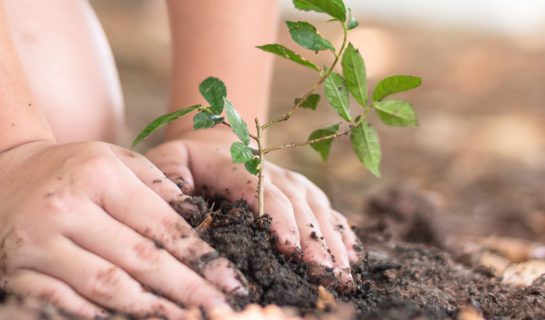
This page brings together hands-on tips that many blind and partially sighted people find useful when gardening day to day.
Organising tools and space
Keeping tools and equipment organised can make gardening easier and reduce frustration. Using containers or storage areas where everything has a set place can help with finding items again. Tools with coloured handles or added tactile markers can be easier to identify by sight or touch.
Before starting a task, it can help to gather everything you need and keep it nearby, for example in a bucket or tray, to avoid repeated trips back and forth.
Planting, spacing, and maintenance
When pruning shrubs or plants, tying a piece of string after your first cut can help you judge the length of further cuts. For spacing plants evenly, a piece of string with knots at set distances can act as a guide. A bamboo cane placed on the soil can also help you keep rows straight.
Weeding can feel daunting, but with some initial sighted support, many people learn to recognise common weeds by touch or smell. Bright markers or labels can help identify where plants are positioned, especially when they are small.
Using pots and containers can make plants easier to locate, move, and maintain, particularly if bending or kneeling is difficult.
Safety and confidence
When using canes or stakes, it’s a good idea to cover the ends with something soft, such as a cork or foam ball, to reduce the risk of injury when bending down. Wearing gloves and sturdy footwear can also help you feel safer and more confident while working.
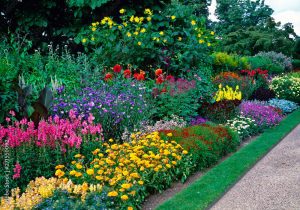
Thinking about contrast throughout the garden can be helpful. This might include contrast between plants and soil, edging and paths, fencing, garden furniture, and surfaces.
Enjoying the garden in different ways
Choosing plants that add sound, scent, or texture can make the garden more enjoyable. Movement from grasses, the sound of wind through plants, or the scent of herbs and flowers can all add to the experience. Garden ornaments that create sound or movement can also help with orientation and enjoyment.
Further support
If you are new to gardening or considering redesigning your space, Thrive is an organisation that offers advice and guidance on gardening for health and wellbeing. They provide information on planning paths and beds, choosing tools and equipment, and adapting gardening tasks. Thrive offers support including information for blind or partially sighted people. See their website for more information – Thrive website link.
If you would like more introductory guidance, you may also want to read our Get into the garden article, which explores ways to get started and feel confident in your garden.
Our Community Sight Loss Advisors are always happy to talk through ideas and offer guidance if you would like more support.