
Get into the garden
Whether you are a seasoned gardener or just starting out, and whatever the size of your space, gardening can offer real benefits for your health and wellbeing. Being outdoors, moving your body, and connecting with nature can be rewarding in many ways.
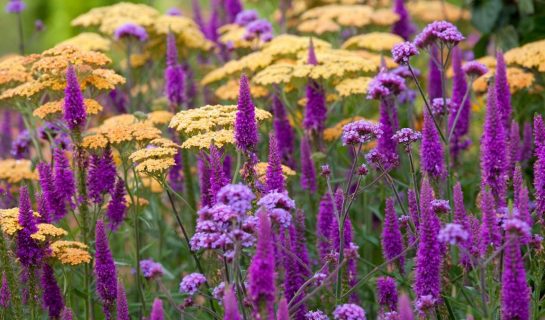
If you are blind or partially sighted, gardening may need to be approached a little differently, but with some thoughtful adaptations it can still be enjoyable and manageable. This page offers an overview of ideas to help you feel more confident getting started and finding your way around your garden.
Getting comfortable in your garden
If you are new to gardening with sight loss, it can help to begin by focusing on moving around your garden safely and confidently. Improving contrast can make a big difference if you have some useful vision. For example, adding a white or light-coloured painted line to the edge of pathways, steps, or the base of a fence can help define boundaries.
Sound can also be a helpful way to orient yourself. A radio playing at one end of the garden, wind chimes, or a small water feature can provide gentle audio cues to help you judge where you are. Keeping tools stored in a consistent, tidy way can also make things easier. Some people find it helpful to add brightly coloured tape or markers to tool handles so they are easier to locate.
Making planting easier
Simple changes to how you plant can help with organisation and make ongoing maintenance more manageable. Fixing a brightly coloured string line across a bed can help you plant in straight rows. Using plant labels placed in the same position each time, such as directly in front of a plant, can help with identification later on.
Planting in blocks or lines can make it easier to tell the difference between plants you want to keep and weeds you want to remove. If you enjoy curved planting, a hula hoop can be a useful guide for creating circular shapes.
Choosing plants and planting schemes
Your choice of plants and layout can have a big impact on how accessible and enjoyable your garden feels. Many people find that certain colours stand out more clearly, such as yellow, white, or orange. Placing pale flowers against a darker background, like a fence or shrub, can also improve visibility.
Gardens can be enjoyed through more than just sight. Sensory planting can add interest through touch, sound, and smell. Plants like lamb’s ear or angel wings have soft textures. Grasses can create gentle movement and sound, while plants such as lavender, roses, honeysuckle, viburnum, and sweet peas offer strong scents. Bees and other insects can also add familiar, reassuring sounds to the space.
Identifying plants
Identifying plants in a full garden can be tricky. There are free smartphone apps that can help by identifying plants from a photo. These apps allow you to point your phone’s camera at a plant and receive basic information about it. Examples include PictureThis, Pl@ntNet, and PlantSnap.
Further support and ideas
Gardening can be enjoyed with any level of vision, using a combination of adaptations, new skills, and personal preferences. If you would like to explore accessible gardening in more depth, RNIB has a range of gardening articles, and the charity Thrive produces gardening advice and resources in a variety of formats.
If you would like more practical, step-by-step ideas, you may also find our companion guide, Gardening tips and tricks, helpful.